“In short, these days especially, music is devoid of emotional impact. I feel that, without descending to the level of the gossip column or the novel, it should be possible to solve the problem somehow. There’s no need either for music to make people think! … It would be enough if music could make people listen, despite themselves and despite their petty mundane troubles, and never mind if they’re incapable of expressing anything resembling an opinion. It would be enough if they could no longer recognize their own grey, dull faces, if they felt that for a moment they had been dreaming of an imaginary country, that’s to say, one that can’t be found on the map.” — C. Debussy, letter to Paul Dukas (1901)
2025
More information coming soon
2024
Despite navigating significant challenges that propelled remarkable personal growth, 2024 became a landmark year for me. I wrote and had premiered two extraordinary works — Nocturne for Piano, which moved a noted author to tears, and The Storm Glass, described after its premiere as ‘neo-romantic from an alternate universe.’

It was also the year I surrendered myself to Him, a journey that brought profound meaning and purpose to my life.
As always, I wish to express my deepest gratitude to everyone who has commissioned, programmed, performed, and premiered my work. I am especially thankful to those who have contributed financially, enabling the development of my compositions, and to all who continue to enjoy and share in the experience of my music. Your support and appreciation mean the world to me.
Highlights
The Storm Glass
Composed for septet – Soprano, Oboe, String Quartet & Piano
Text by Lisa Gorton
Duration: 11 minutes
Year: 2023-2024
Full score and parts available, with program notes
Recording of live performance available
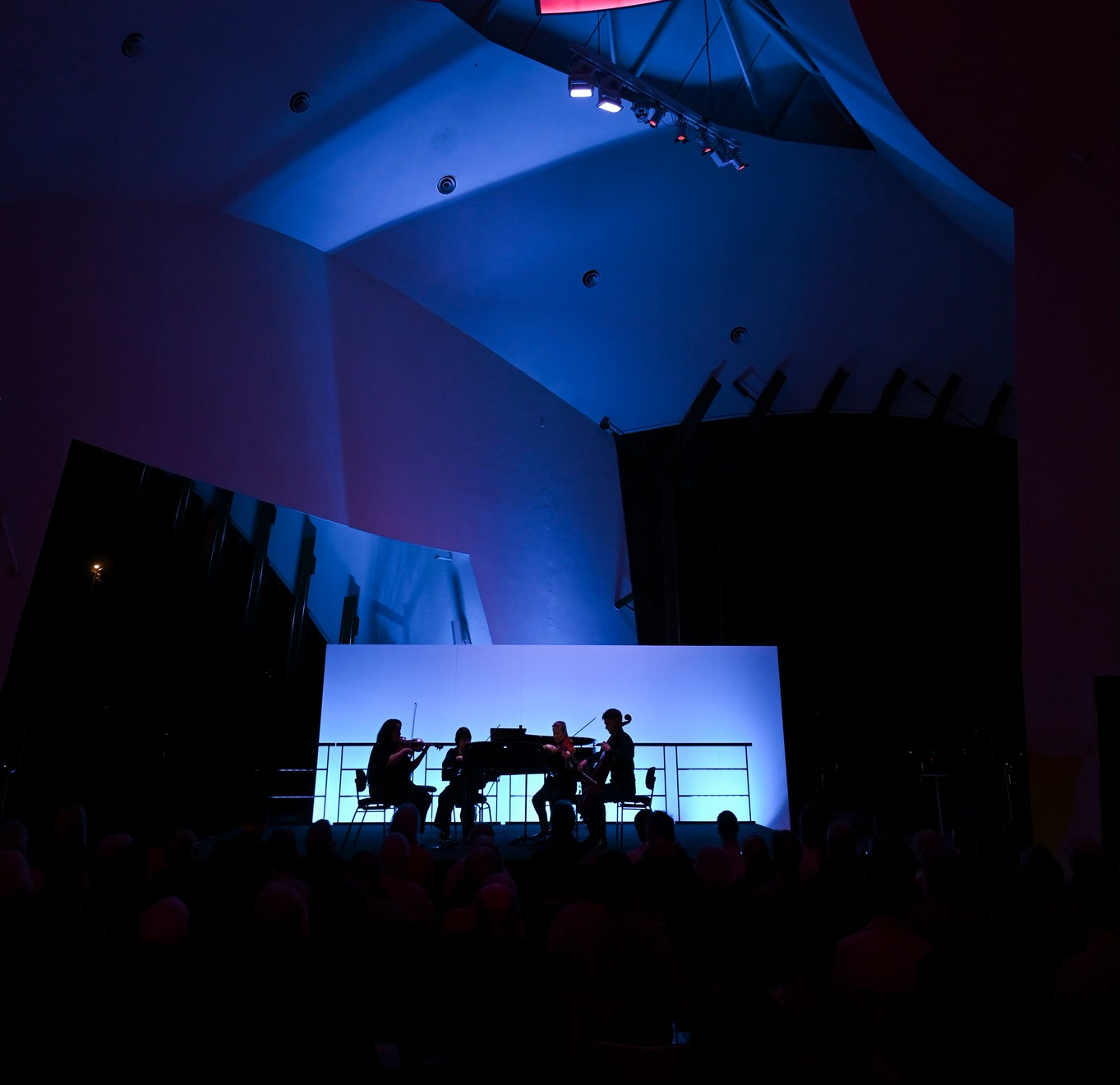
Working with Amy Moore (soprano), conductor Jess Cottis, and the elite musicians of the Canberra Symphony Orchestra was an unforgettable career highlight. They truly captured the essence, nature, and character of the work, bringing it to life with such justice and artistry. This piece would never have been realized if I hadn’t attended a sci-fi poetry slam, of all things, where I had the privilege of meeting the brilliant author Lisa Gorton. I am delighted to call Lisa a friend and deeply grateful for her generosity in allowing me to use her published work from Hotel Hyperion. At this premiere, the esteemed Australian composer Peggy Polias described my piece as “neo-romantic from an alternate universe”—a reflection I absolutely adore and feel perfectly encapsulates my approach to music. Thank you, dear Peggy, for your insightful and generous words.
Nocturne for Violin & Piano
Duration: 10 minutes
Year: 2023-2024
Full score and parts available, with program notes
Recording available
Premiered by Matthew Rigby (Violin) & Alex Raineri (Piano)
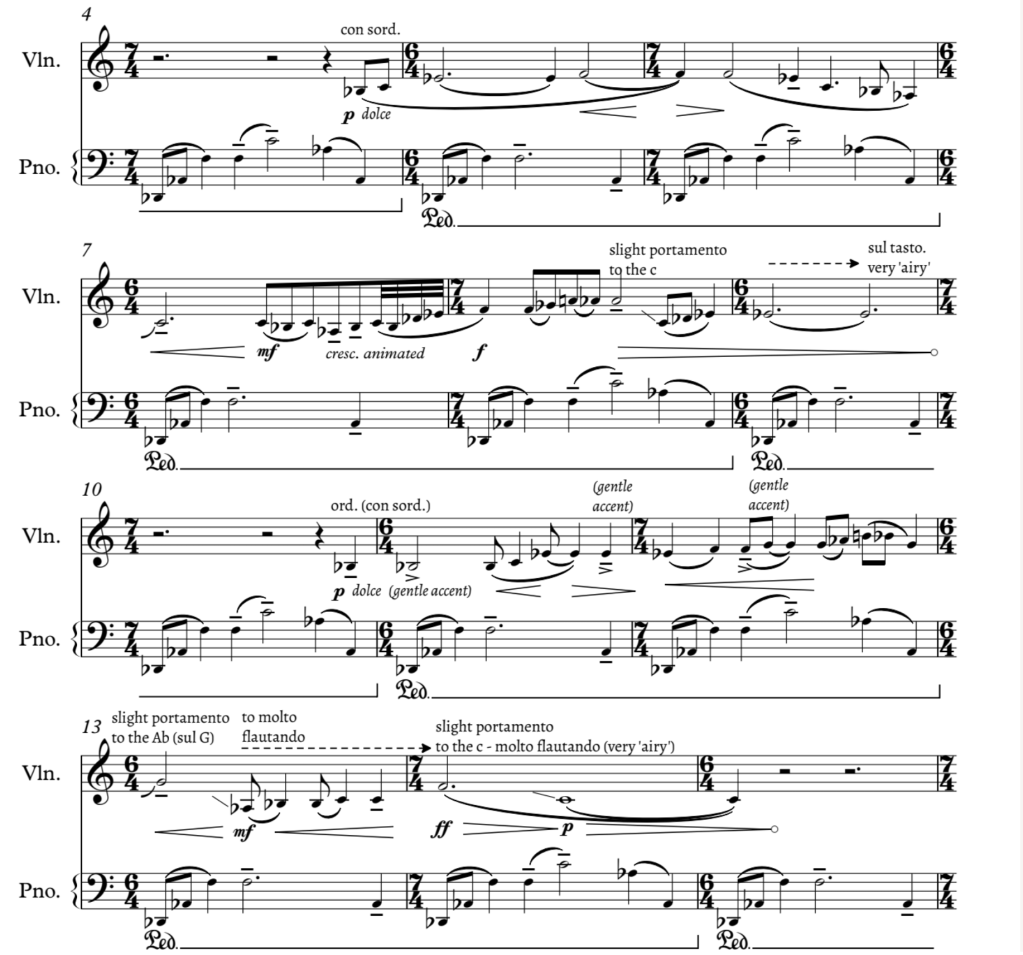
I wish to extend my heartfelt thanks and deepest gratitude to Matthew and Alex for premiering this work on 3MBS Classic FM, Melbourne’s leading classical music station, and for performing it live in both Brisbane at Fourth Wall Arts and Melbourne, at Tempo Rubato.

I am immensely delighted with this piece and profoundly moved by how beautifully they captured its essence. I feel truly blessed and honoured by their incredible artistry.
Elegy for Piano – On Tour in Regional NSW, London & France
My Elegy has continued to be championed by Alex Raineri, who has programmed the work across the nation and internationally.
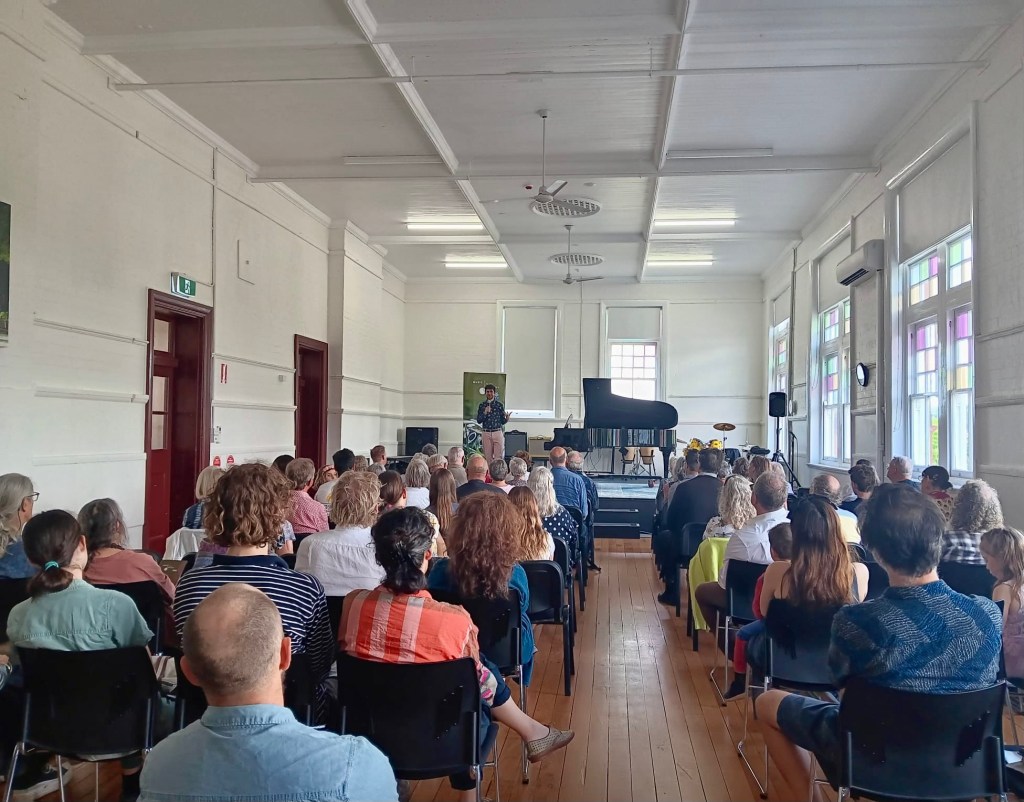
I am beyond grateful that it was selected by Alex as part of an all-Australian solo piano program in partnership with Music In The Regions.
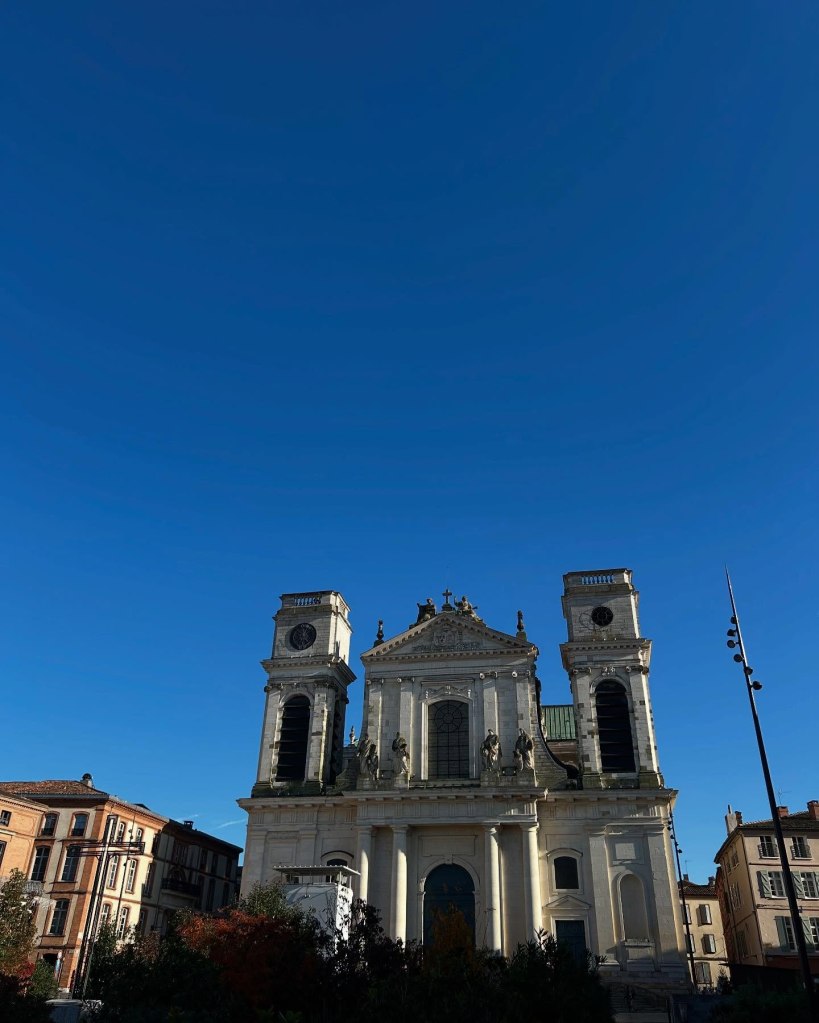
I also wish to extend my heartfelt thanks to French pianist Trami Nguyen, who performed the piece for the second time in France.
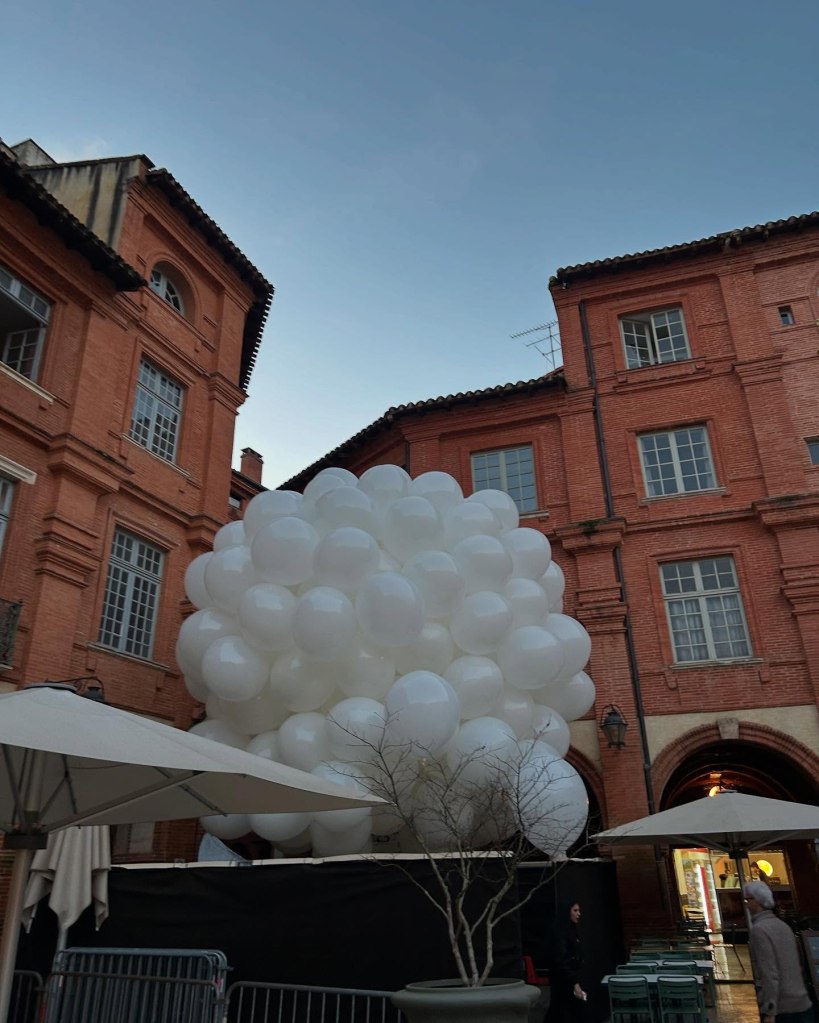
On this occasion, Trami programmed my Elegy alongside masterpieces by Schumann and Janacek at the Festival Lettres d’Automne.
Your support and artistry mean the world to me — thank you both.
Sydney Microfest

In June, I had the privilege of flying to Sydney to experience what I consider to be one of Australia’s best-kept secrets in music-making. This incredible gathering of microtonalists brings together musicians to share their passion and joy for creating music in various temperaments. Among the highlights was the premiere of my new electroacoustic work, The Waiting Room, composed in the Bohlen-Pierce temperament. The piece featured a recording I created, with a cellist and French horn player improvising live over the top—a truly unique collaboration.
Held across three concerts over three days, the event was an experience like no other. During the first concert, it struck me that there’s truly nowhere else in the country—and perhaps even the world—where one could hear chords and tunings like this. If you’ve never attended, I urge you to go at least once—it was absolutely mesmerising.
Largo – with The Crossing Machine
I have been fortunate this year to enjoy repeat performances of my Largo for string quartet (originally the slow movement from my clarinet quintet for clarinet and string quartet). This time, the piece was performed by Melbourne’s astonishing ensemble, The Crossing Machine. I wish to extend my heartfelt thanks to them for programming my work—it truly means so much to me.

Falling Petals
A delightful little piece in Bohlen-Pierce temperament that I will release in 2025 – My thanks to the amazing team and community at the Melbourne Composers League for programming it in September.
Seedlings featured on Spotify
I would like to extend a heartfelt thanks to the Australian Music Centre for featuring my work Seedlings for six pianos in their Australian Music | Piano playlist on Spotify.
2023 – December
“Sustainable, Controlled Growth” – a mindset and framework for continuity
News at a Glance:
Universe no. 3
String Quartet No. 1 – Commission (2023/24)
Canberra Symphony Orchestra – Commission (2023/24)
Major Releases Complete
Elegy for Piano – HSC & Multiple National & International Performances
Trio for Clarinet, Viola and Piano premiered (Australia, Netherlands & USA)
Premiere for Low Brass Trio at Sydney MicroFest (2023)
New Organ Piece for Phillip Gearing (2024)
Master of Teaching
Naarm Etudes for Piano (2024)
New Work for Tenor Nick Kirkup (Tasso/Baggaley) (2024/25)
New Work for French Horn, Cello & Bohlen-Pierce Piano Sydney MicroFest (2024)
Recording and planning releases throughout 2024.
This year has proven to be an immensely productive (i.e. significantly challenging yet rewarding) year for creativity, professional and personal development.
The word I would use to describe this year is: ‘endeavour’.
However; before we dive in – I just want to thank you for reading the below;
but, mostly for listening to my music and following my journey as a composer.
This is not for me.
The audience – you – are the final piece of each and every composition I write.
Your generosity fuels my creativity.
Thank you.
String Quartet No. 1
For the longest time, perhaps a decade,
I have wanted to compose a string quartet; and, earlier this year that dream came true.
I was commissioned by the amazingly talented musicians from the Black Square String Quartet
to compose my first string quartet – a 23 minute work in one continuous movement.
It is a combination of my Monochromatic style that translated Nirvana’s “About a Girl” into musical pitches.
In fact, the entire work was originally influenced by Nirvana’s infamous Unplugged in New York MTV set.
The post-modernist influences of Bartok, Powderfinger, Nirvana, minimalism and traditional classicism can be found throughout this work also.
Australian Series Commission
Something really special happened a little while ago.
I received a lovely return email unexpectedly from the Canberra Symphony Orchestra earlier in the year.
I will be composing a work for Soprano, String Quartet, Oboe and Piano for their Australian Series at the National Museum, in May.
For this commission, I have chosen to work with text from Rhodes Scholar, Lisa Gorton, who I met at a Sci-Fi Poetry Slam in Melbourne/Naarm in 2022.
The text comes from a series of poetry she produced in her book titled “Hotel Hyperion”, specifically her poem The Storm Glass.
I cannot put into words how much I adore her poetry; it is profound – please check out her work: https://giramondopublishing.com/books/hotel-hyperion/
Elegy for Piano
My Elegy for piano, received a number of performances this year in Sydney, France, South America, the United States, Melbourne and Mt. Macedon.
I am so pleased that this piece is starting to reach a global audience.
For music teachers – the piece was selected and is now available on the Australian Music Centre’s HSC list: https://www.australianmusiccentre.com.au/workversion/bakrncev-michael-elegy-for-piano/39451
If you have not yet heard it; then please listen to this recording by Alex Raineri: https://michaelbakrnchev.com/video/
Violin Sonata
I was approached by a local violinist to compose a new work for their 2024 programming – I am very excited about this, and planning has begun.
Trio for Clarinet, Viola & Piano
I was selected to compose this self-portrait miniature, in a global project spearheaded by Paul Kopetz.
The end result was a tapestry of music composed by 50 composers, who each wrote one minute of music.
The work was premiered in Australia, Netherlands and the USA.
I would love to expand my piece as I love the tone of the viola
in combination with clarinet and piano – there is a dark and mysterious
sound world there that I would love to make good use of.
Microtonality
My low brass trio (French Horn, Trombone and Tuba), Crying Leaf,
was premiered at the Sydney MicroFest earlier this year.
I used my monochromatic method, paired with a ‘Piem’,
which is a style of poem that uses the numbers of Pi – it was a lot of fun.
My new work for French Horn, Violoncello and Bohlen-Pierce Piano
will receive its debut at the MicroFest, 2024.
I have the Piano part down, and have begun improvising the Cello and Horn parts.
I have been researching non 12TET temperaments over the last year or so;
and have begun to work with Bohlen-Pierce tuning recently on my digital Yamaha P45,
Pianoteq and Scala (thanks, Andrian!)
having recorded ~60 minutes of music in about 3 days or so that I will release in 2024.
Organ Arrangement
I am arranging a short section of my String Quartet No. 1 for Organist, Phillip Gearing,
who was my aural and theory lecturer at university many moons ago.
He is a distinguished musician and pedagogue in his own right,
and I am grateful for the opportunity to contribute to his national and international programming.
Tasso – Italian Love Poetry
I am planning on setting Tasso’s 16th Century love poems (translated expertly by Stephen Baggaley) for tenor, Nick Kirkup.
They are a beautiful set of poems that I am really excited to bring to life.
Largo for String Quartet on Tour
This year the Black Square String Quartet premiered and toured my Largo for String Quartet (2012, arranged/revised 2023).
Their brilliant performance can be found on my website, under the video tab – special thanks to Thomas Green for the video and audio production.
Moreover, I wish to thank Melbourne’s The Crossing Machine, who gave the Melbourne premiere of the work.
It was a momentous occasion for me, as I shared the stage and program with esteemed
composers from Melbourne (in alphabetical order); S. Greenbaum, L. Kouvaras, C. Martin, A. Pertout and K. Rawlings.
Universe No. 3
We welcomed Universe No. 3 into our lives; and, we are deeply grateful for our blessing.
It is certainly an adjustment, but we are incredibly happy.
The thought of growing old with my wife and seeing our three children grow and be part of our lives is a beautiful, energizing and deeply motivating prospect.
Composer as Provider
It is a unique position I find myself in however; that is, as a composer, to be the provider.
I am feeling the full weight of our struggling economy (in my case, with inflation and project-based work –
no certainty can be crippling) – at times it is immense.
It is added pressure that I could absolutely do without – although;
there is no time to be concerned – just learn to somehow expand one’s bandwidth and energy – for I have no choice.
I find myself in a position where I will be the classic ‘dad had three jobs when we were growing up’ scenario …
1/ day job as a project manager (high-risk high-reward business model);
2/ work as a composer (commissions, sheet music, streaming);
2a/ I may as well reveal that I create fantasy battleboards and scenery too: check out my work on Instagram at fantasy_battlegrounds,
and finally; 3/ I am pursuing my Master of Teaching.
All of this is so that I can pursue composition, make ends meet and provide for my family.
I have wondered; am I the epitome (shining example) of the modern man; or,
am I the millennial with way too many side-hustles social experiment gone wrong under the banner of late-stage capitalism and now, technofeudalism?
Any father would hope for the former, without question.
Sustainable, Controlled Growth
If you fail to plan, you plan to fail.
This is where my personal ideology of “Sustainable, Controlled Growth” supports me.
It is a holistic approach to being a composer; whereby effective project management overrides neurotic artsy flare ups;
thus, allowing one to achieve their goals whilst having the freedom
and flexibility to be wildly creative, when it is appropriate to do so.
Moreover, it protects me from burnout as it provides a step-by-step plan to improve and progress.
Release Strategy & Streaming Success
The output that I have delivered this year is testament to this method.
I have successfully released many recordings of my works from some eminent ensembles and institutions;
such as, the Australian National Academy of Music; Melbourne Symphony Orchestra;
Linos Piano Trio; the Song Company; the Melbourne Metropolitan Sinfonietta;
Plexus; Alex Raineri and the Brisbane Music Festival;
the Queensland Conservatorium Symphony Orchestra; the Barega Saxophone Quartet
and the Australian Youth Orchestra.
Together with a mix of independent micro releases
suitable for today’s streaming environment,
I have surpassed 250,000 streams.
Thank you!
Naarm Etudes for Piano
I aim complete my Naarm Etudes (formerly, Naarm Haiku) no. IV & V which are strictcly in my monochromatic style,
some stemming from poetry by Lisa Gorton, others instructed by me with the help of Artificial Intelligence.
Upon completion, and successful funding, they will be premiered and recorded by Alex Raineri.
New Releases
I have planned a host of new releases for 2024, including:
music for Bohlen-Pierce tempered digital piano,
music concrete ex-film music featuring my good friend on guitar,
me on clarinets and a rapper from the US,
and a twelve tone serialist piece for Bass and Soprano, sung in Macedonian.
Pedagogy
In July I enrolled to obtain my Master of Teaching (Secondary, Double Music).
It is a two-year full-time research-based program, with several practicums structured throughout.
I am currently working throughout the summer term to obtain my qualification in a quicker time frame (18 months, rather than 24).
Fun fact: my Son was born the day before my first practicum commenced.
Music education is part of the Australian curriculum; yet, music literacy is in decline.
Let’s work together to boost the significance of music in our lives.
I encourage attending local classical music concerts – many of them are cost effective,
very pleasant, inclusive and even suitable for children (ask the concert organizers beforehand if the program is suitable for children).
Recently, I took my eldest daughter (who was not yet 5),
to a concert featuring Viola and Harp with a mix of
European and Australian repertoire in a lovely church in Melbourne.
They were world class performers – think about the
positive long-term impact that has on a child’s cognitive development.
Conclusion
Thank you for taking the time to read through all of my current and future musical happenings. I extend to you a Merry Christmas, and Happy New Year!
Michael
2023 – February
On stylistic development & “Monochromaticism” – development, expansion and exploration of a personal musical language.

Image credit: Art generated for ‘Naarm Haiku – for solo piano’, created in Midjourney by the composer.
In 2023, I will continue my journey exploring a unique pre-compositional mapping and inspirationist technique I call ‘Monochromaticism.’
This technique is based on using a single colour to create art, as inspired by the visual arts practice of monochromatism.
I began developing this technique in 2010 and continued to do so as my experience as a composer grew.
Colour is composed of various combinations of tints, hues, and shades.
The primary pigment we see is the result of our biological limits of light perception.
This leads me to ponder what we may be missing not just visually but also in terms of music and frequency.
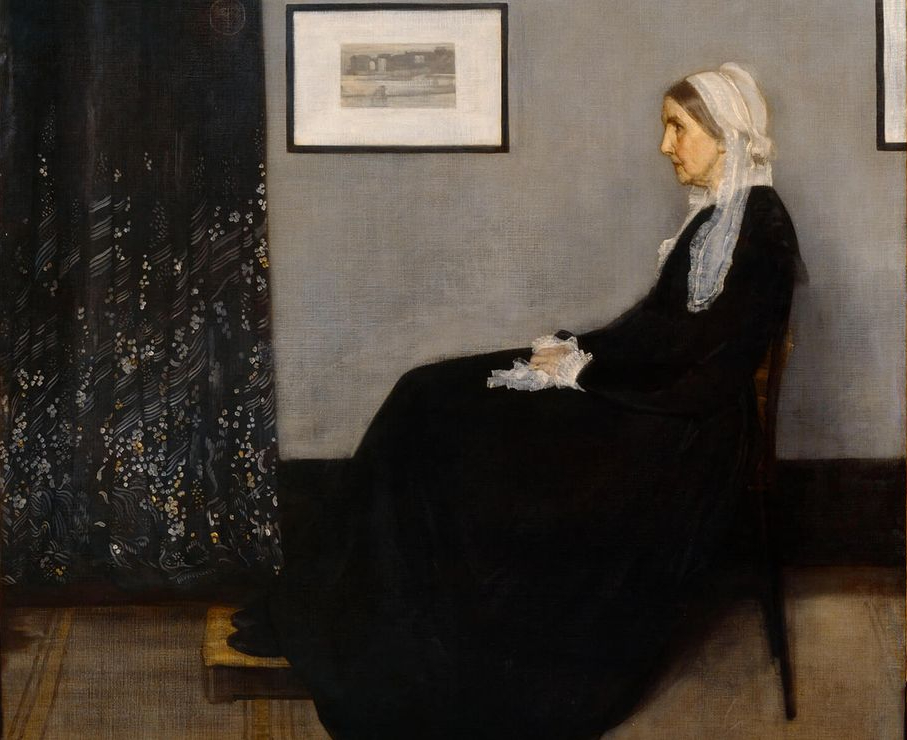
Below is an image of a famous monochromatic image of which we are all familiar
Arrangement in Grey and Black No. 1 (Whistler’s Mother) (1871) by James McNeill Whistler
Here, an interior stylist utilizes a monochromatic colour scheme to enhance the aesthetic of this urban living space.

Learn about the Monochrome artform here: https://artincontext.org/monochromatic-art/
In 2010, during the early stages of its development, monochromaticism was conceived as a tool to generate intriguing chord progressions
that would serve as a foundation for melodic and harmonic composition.
This was achieved by converting words from the English alphabet into musical pitches using a system that assigns a numeric value to each letter
and maps it to a specific pitch within the western 12-tone equal temperament (12TET) system.
The earliest example of this technique can be seen in my piece ‘Variations for Piano – 5 Rudimentary Elements to Embellish The Individual,’ (2010) which I plan to record and analyze in the future.
The most prominent demonstration of this technique can be heard in my orchestral work, ‘Translations for Orchestra’ (2013),
which will be released globally on the 10th of March, 2023.
My Naarm Haiku (2022/2023) is the newest example of this technique,
showcasing a unique blend of Eastern ethnic cultural influences (my immigrant story),
Western modernism, and traditional western musical elements such as melody, rhythm, colour,
form, structure, phrasing, rubato, silence, texture, and mood.
An example of my Naarm Haiku No. 2 (Dream) is showcased below,
inspired by Melbourne Science Fiction author Lisa Gorton’s captivating work “The Hotel Hyperion.”
I had the privilege of meeting her at the 2022 Sci-Fi Poetry Slam
held at the State Library and am thoroughly grateful and pleased to continue working with her and her stunning texts.
Expanding beyond the basic principle of translating text into musical pitches,
one can delve into the principles of colour and use them to enhance the development of musical ideas,
particularly in terms of harmony and orchestration.
Hue – In monochromatic art, hue refers to the dominant colour or the purest form of a colour in a piece.
It is the basic colour of the spectrum that is used to create the artwork and serves as the starting point for creating tints, shades, and tones.
The hue selected is the main colour used to create the overall visual effect of the piece, and all other colours in the artwork are variations of that hue.
In Monochromaticism, each translated word is considered a “hue” or dominant colour, serving as the foundation for the creation of musical pieces.
Shade – In monochromatic art, shade refers to a variation of a hue created by adding black to it.
The amount of black added affects the darkness or lightness of the colour, creating a range of shades that are lighter or darker than the original hue.
This allows for the creation of depth and dimension within the monochromatic piece,
as different shades of the same hue can be used to create contrast and highlight certain elements within the artwork.
In Monochromatic music,
the concept of shade can refer to variations in dynamics, timbre,
and expression within a single musical phrase or chord progression.
By using different levels of loudness, brightness, and inflection,
a composer can create a sense of depth and nuance within a monochromatic palette,
giving the music greater emotional and musical range.
This allows for more complex and layered compositions to be created
within the constraints of a single musical colour or hue.
Tint – In monochromatic art, a tint is a hue that has been lightened by the addition of white,
creating a softer and more delicate version of the original colour.
This helps to create variations in the overall tonality of the artwork and allows
for the use of multiple colours within a single monochromatic palette.
By using tints, the artist can create a more nuanced and textured composition.
In Monochromatic music, a tint can refer to a variation of a single musical pitch or chord
that is produced by adding extra notes at a higher or lower pitch than the original.
This allows for a more nuanced and dynamic musical expression within the limitations of a single colour or tone.
Below, a painter demonstrates Monochromatic painting in real time.
My Naarm Haiku consists of five solo piano pieces,
each inspired by various texts to guide the mood and tonality.
The compositions draw on the principles of Monochromaticism
and offer the performer freedom to adjust tempo and phrasing.
Pictured below, the preliminary bars of Naarm Haiku No 2 (Dream) for piano.
I created this haiku based on the work “The Hotel Hyperion” by Australian poet,
novelist, literary editor and essayist Lisa Gorton.
Naarm is the Kulin Nation’s name for the region also called Melbourne.
These bars show the origin of notes in the bars to follow, and are not to be played.

I extend my heartfelt gratitude to C. Woolmore,
the Special Projects Manager at the Wurundjeri Woi Wurrung Cultural Heritage Aboriginal Corporation,
and the Elders for their insightful review and approval of these texts
through their Cultural Consultations process.
So far, the first three pieces of Naarm Haiku have been composed,
and upon completion of the last two pieces (“Beer” and “Home”),
a premiere performance would be appropriate.
Stay tuned.

Lost & Found
2017 – 2022

“Water” for flute quartet (2010), cover art image generated in Midjourney by the composer.
Between 2017 and 2022, I may not have been as dedicated to my artistic pursuits and career advancement as I am today,
but those years were still significant in my personal life.
I celebrated marriage and welcomed my children into the world.
I was honoured to serve as Australia’s representative at the 35th Asian Composers League festival in Taiwan in 2018,
and receive several premiere performances by established orchestras,
ensembles, and soloists.
Despite facing many obstacles during this time,
these experiences have only further strengthened my creativity
and shaped me into a more confident and imaginative artist.
I am proud of my journey and grateful for the ways it has enriched my art.
 Michael Bakrnčev - Composer